
Precision Gear Chains for Industrial Robot Joint Drives: Engineering Faster, Lighter Robotic Arms
Published by the Engineering Team at Gear-Chains.top | Applications Division | United Kingdom
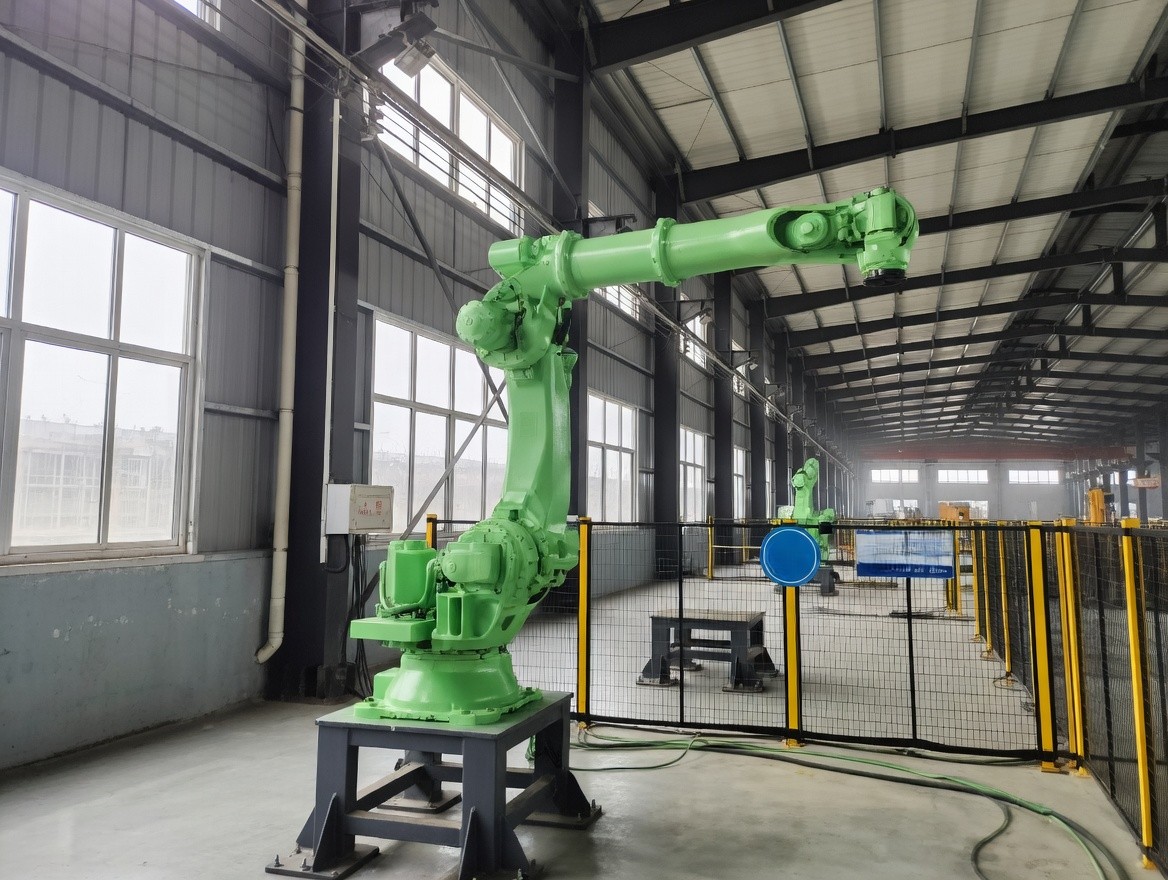 Industrial robotics is moving at a pace that would have seemed impossible a decade ago. Six-axis articulated robots, delta robots, and long-reach manipulators are transforming automotive welding lines, electronics assembly halls, and pharmaceutical packaging plants across the United Kingdom and beyond. Behind that performance sits a transmission challenge most people outside the engineering department never think about: how do you deliver precise rotary motion to a joint that must be as light and compact as possible? The answer, in a growing number of advanced robotic platforms, is a precision gear chain. By relocating the servo motor to the robot’s fixed base and routing torque through a carefully tensioned chain to the distal joint, designers shave kilogrammes off the moving mass, boost dynamic response, and still hold repeatability figures that satisfy the tightest production tolerances. This article digs into the real-world engineering of gear chains for industrial robot joint drives — covering the transmission principles, material choices, performance benchmarks, and the practical lessons our team has gathered over eighteen years of supplying chain-drive solutions to robotics integrators throughout England, Scotland, and Wales.
Why Chain Transmission Is Gaining Ground in Robot Joint Architectures
Conventional six-axis robots pack a servo motor and a harmonic or planetary reducer right at each joint. That arrangement is elegant and self-contained, but it carries a penalty: every gramme of motor and gearbox mass sitting at the wrist or elbow must be accelerated and decelerated during every cycle. In high-speed pick-and-place applications — think a delta robot sorting 180 biscuits per minute on a conveyor in a Midlands bakery — that inertia limits peak acceleration and drives up energy consumption. Gear chains offer an alternative path. Mounting the servo on the stationary base frame and transmitting torque through a precision chain to the remote joint can cut the moving mass by 30–50 percent, depending on the layout. The result is a robot arm that changes direction faster, settles quicker, and uses less current per cycle. Integrators we work with across the UK have reported cycle-time reductions of 12–18 percent after retrofitting chain-driven joints on parallel-kinematic machines, and that figure goes straight to the bottom line when you multiply it across millions of cycles per year.
The Core Challenge — Repeat Positioning Accuracy Below ±0.05 mm
Any engineer who has worked with industrial robots knows the golden number: ±0.05 mm repeatability — or tighter. Achieving that with a chain-driven joint means controlling every source of backlash and elastic deformation in the transmission. A standard roller chain running on a simple sprocket will never get there; the polygon effect alone introduces cyclic velocity variation that shows up as positional jitter at the end effector. That is why robot-grade gear chains are a different breed entirely from the chains you would find on a packaging-line conveyor. They use inverted-tooth (silent chain) profiles that wrap smoothly around the sprocket, virtually eliminating the polygon effect. Pitch accumulation error is held below 0.02 mm over 500 mm of chain length through grinding and selective assembly. Pre-tensioning systems remove slack-side sag, and zero-backlash tensioners maintain constant wrap angle throughout the working life. When all of those elements come together, the chain drive matches or betters the repeatability of a well-maintained toothed-belt system while handling significantly higher torque loads — a combination that belt drives struggle to deliver in compact envelopes.
Key Advantages of Robot-Grade Gear Chains
Reduced End-Effector Inertia
Relocating the motor and reducer to the base eliminates up to half the rotating mass at the distal joint. Lower inertia translates directly into higher permissible acceleration, shorter settling times, and reduced servo-amplifier sizing — savings that cascade through the electrical cabinet as well as the mechanical structure.
Superior Torque Density
Compared with synchronous belts of equivalent width, precision gear chains handle 40–60 percent more torque before tooth-skip occurs. This allows designers to use a narrower chain, saving space inside the robot arm envelope — critical in compact delta platforms where every millimetre counts.
Minimal Polygon Effect
Inverted-tooth (silent chain) geometry engages the sprocket along a smooth involute path rather than wrapping around discrete roller seats. The velocity ripple drops to below 0.3 percent at common sprocket sizes, keeping positional jitter well within robot-grade tolerances.
Long Service Life with Low Maintenance
Heat-treated alloy-steel link plates and hardened pins deliver working lives exceeding 15,000 hours under rated load. With sealed lubrication and an enclosed chain case, maintenance intervals stretch to 4,000 hours — far longer than timing belts that degrade from ozone, heat, and micro-cracking in the same operating environment.
Technical Specifications — Robot-Grade Gear Chains
| Parameter | Silent Chain (SC Series) | Precision Roller Chain (PR Series) |
|---|---|---|
| Chain Pitch | 6.35 mm / 9.525 mm | 6.35 mm / 8.0 mm |
| Pitch Tolerance (per 500 mm) | +/- 0.015 mm | +/- 0.025 mm |
| Maximum Speed | 12,000 rpm (at 21-tooth sprocket) | 8,000 rpm (at 21-tooth sprocket) |
| Rated Tensile Strength | 14.2 kN (9.525 mm pitch) | 8.9 kN (8.0 mm pitch) |
| Backlash (with tensioner) | Less than 1 arc-minute | Less than 3 arc-minutes |
| Velocity Ripple (polygon effect) | Less than 0.3% | Less than 1.5% |
| Operating Temperature | -20 C to +120 C | -20 C to +150 C |
| Link Plate Material | SCM415 carburised alloy steel | SCM440 quenched & tempered |
| Pin Surface Hardness | HRC 58–62 | HRC 56–60 |
| Lubrication | Factory-sealed grease (NLGI 2) | Oil bath or drip feed |
| Design Life (rated load) | 15,000+ hours | 10,000+ hours |
How Gear Chains Work Inside a Robotic Joint
 A robot-grade gear chain transmits motion from a driving sprocket (keyed to the servo motor shaft via a rigid coupling or precision planetary reducer) to a driven sprocket fixed at the remote joint. The chain wraps around both sprockets and is kept at a controlled pre-load by a spring-loaded or cam-actuated tensioner on the slack side. In the inverted-tooth variant — often called a silent chain — each link carries a pair of inward-facing teeth that mesh with straight-sided pockets on the sprocket. Because engagement happens along a line rather than at a single point (as with roller chains), the load distributes more evenly, noise drops significantly, and the effective pitch circle remains nearly constant through each engagement cycle. The result is smoother angular velocity transfer and less vibration fed back into the robot frame — two things that matter enormously when the control loop is trying to hold a tool-centre-point to within a few hundredths of a millimetre.
Material selection is non-negotiable. The link plates are stamped from carburised chromium-molybdenum alloy steel (typically SCM415 or equivalent), giving a hard, wear-resistant surface over a tough, shock-absorbing core. Pins and bushings are ground to mirror finishes below Ra 0.2 micrometres to minimise friction and extend grease life. Sprockets are machined from case-hardened carbon steel or, where weight saving is paramount, from 7075-T6 aluminium alloy with hard-anodised tooth flanks. The tensioner assembly uses a polyamide or PEEK shoe riding on a hardened guide rail, chosen for low friction and resistance to the synthetic greases commonly used in cleanroom-adjacent robot cells. Every component is traceable back to the heat lot, and each assembled chain ships with a dimensional inspection report — a standard that our customers in the UK automotive and aerospace sectors insist upon.
Application Scenarios Across UK Industries
Delta Robot Pick-and-Place (Food & Beverage)
High-speed delta robots in UK food factories use gear chains to connect base-mounted motors to the three parallel arms. The chain drive allows cycle rates above 150 picks per minute while keeping the moving platform light enough for rapid directional changes. Stainless-steel link plates and food-grade lubrication satisfy BRCGS audit requirements without compromising transmission accuracy.
Long-Reach Articulated Arms (Automotive Welding)
In body-in-white welding cells across the West Midlands, extended-reach robots use chain-driven wrist joints to handle heavy spot-welding guns without oversizing the J5/J6 motors. Gear chains carry 85 Nm continuous torque at 3,000 rpm through the forearm section, feeding a harmonic reducer at the wrist flange. The arrangement keeps cable-routing simpler and reduces heat build-up inside the arm tube.
Semiconductor Wafer Handling (Cleanroom Robotics)
Cleanroom SCARA robots in the UK semiconductor supply chain demand near-zero particle generation. Sealed silent gear chains running in enclosed stainless casings produce far fewer particulates than open-belt systems. The chain’s metallic construction is also immune to outgassing — a common disqualifier for polymer timing belts in ISO Class 4 and Class 5 environments.
Collaborative Robot (Cobot) Auxiliary Axes
When a collaborative robot is mounted on a linear rail or a rotary table to extend its workspace, a gear chain often drives the auxiliary axis. The chain’s positive engagement eliminates slip under sudden emergency-stop decelerations — a safety requirement under the Machinery Regulation that governs cobot installations across the UK and Europe.
Customer Success: Chain-Driven Delta Robot Upgrade at a West Midlands Confectionery Plant
 In late 2023, a major confectionery manufacturer based near Birmingham approached us with a throughput bottleneck. Their four delta robots — each running three-axis pick-and-place at 130 cycles per minute — could not keep pace with a new, faster packaging line. The original machines used HTD-5M timing belts. After conducting a kinematic analysis, our applications team recommended replacing the belt drives with SC-series silent gear chains, fitted with aluminium sprockets and PEEK tensioner shoes. The retrofit took a single weekend shutdown per robot. Post-commissioning data showed a peak cycle rate of 168 picks per minute — a 29 percent improvement. Repeatability measured ±0.04 mm at the tool-centre point, comfortably inside the ±0.05 mm target. Belt-replacement downtime, which had been occurring every 3,200 hours, dropped off the maintenance schedule entirely; the gear chains passed their first 6,000-hour inspection with negligible wear. The plant estimates annual savings of over GBP 38,000 in reduced downtime and lower spare-parts inventory.
What Our Customers Say
“We had been struggling with belt wear on our delta line for two years. Switching to gear chains from Gear-Chains.top was a turning point — cycle time went up, unplanned stops went down, and the maintenance team finally trusts the drive system. The technical support during installation was outstanding.”
— James Hargreaves, Production Engineering Manager, Confectionery Manufacturer, Birmingham, UK
“Our automotive welding cells needed a chain that could handle high torque at speed without introducing backlash. The SC-series silent chains delivered exactly that. Repeatability has stayed within spec across three production shifts, seven days a week, for over 8,000 hours now.”
— Dr. Anita Kapoor, Robotics Integration Lead, Automotive Tier-1 Supplier, Coventry, UK
“We operate SCARA robots in an ISO Class 5 cleanroom. Outgassing from polymer belts was a persistent worry. The sealed silent gear chains eliminated that risk entirely, and the particle counts actually improved after the retrofit. An excellent solution — well-engineered and well-documented.”
— Mark Ellison, Facilities Engineer, Semiconductor Packaging, Newport, Wales
Related Transmission Products for Robotic Drive Systems
A gear chain rarely works in isolation. The full drivetrain of a robot joint typically includes several complementary components, each of which we can supply or specify alongside the chain itself. Rigid couplings connect the servo motor output shaft to the driving sprocket shaft with zero angular play — essential for preserving the positional accuracy that the chain is designed to maintain. We supply single-piece clamp-style rigid couplings machined from stainless steel, with bore tolerances to H6, suitable for servo motors from 100 W to 7.5 kW. Precision planetary reducers sit between the motor and the sprocket when a gear-ratio step-down is needed before the chain stage. Our engineering team regularly pairs gear chains with two-stage and three-stage planetary gearboxes offering ratios from 5:1 to 100:1 and backlash below 1 arc-minute. Harmonic reducers (strain-wave gears) are the natural partner at the driven end of the chain, converting the chain’s output into the high-ratio, zero-backlash rotation required at the robot wrist. We hold stock of standard-frame harmonic reducers from 20 to 120 mm bore and can cross-reference to all major robot OEM flange patterns used in the UK market.
Our Manufacturing Capability & Custom Engineering Service
Every robot application is different, and off-the-shelf chain solutions do not always fit. Our factory operates a dedicated robotics-grade production cell with CNC link-plate stamping, automated pin grinding, selective-assembly stations, and a temperature-controlled metrology lab calibrated to UKAS standards. That means we can manufacture bespoke gear chains to your exact specifications — non-standard pitches, custom chain widths, application-specific surface treatments (nickel plating, black-oxide, Dacromet), and matched sprocket sets cut on gear-hobbing centres with profile accuracy better than DIN Class 6. Lead times for custom orders start from four weeks, and we offer prototype quantities as low as a single chain-and-sprocket set so that your R&D team can validate the design before committing to production volumes. Whether you need a one-off solution for a research robot at a UK university or a blanket order for a new production line, our engineering and manufacturing teams work with you from concept through to commissioning.
Serving the UK Robotics Sector — From the West Midlands to South Wales
 The United Kingdom is home to one of Europe’s fastest-growing industrial robotics markets. Automotive plants in the West Midlands, aerospace composite facilities in Bristol and Filton, food-processing centres across East Anglia, and semiconductor fabs in South Wales all depend on robotic automation — and all have drive-system requirements that gear chains can address. Our UK-based technical sales team provides on-site consultations, application reviews, and commissioning support from our logistics hub in the East Midlands, with next-day delivery available to most mainland UK postcodes. We hold buffer stocks of the most popular silent-chain sizes and sprocket combinations, and our engineering hotline is staffed by applications engineers who have hands-on experience with every major robot brand sold in the United Kingdom, including FANUC, ABB, KUKA, Yaskawa, Staubli, and Kawasaki. For integrators responding to tight project timelines — and in the UK robotics industry, the timelines are nearly always tight — having a local supply partner who understands both the product and the application can make the difference between a smooth go-live and a costly delay.
Selecting the Right Gear Chain for Your Robot — Practical Considerations
Choosing a gear chain for a robotic joint involves balancing several interrelated parameters. Start with the torque budget: calculate the peak and continuous torque at the joint, factor in the gear ratio of any upstream reducer, and apply a service factor of at least 1.5 for reversing-load applications (which covers most robot joints). Move on to speed: identify the maximum sprocket rpm and confirm it falls within the chain manufacturer’s published limit for the selected pitch. Consider the centre distance between sprockets — shorter spans are stiffer and offer better positional control, but they require smaller sprockets, which increase wrap-angle demands. Evaluate the environment: does the chain case need to be sealed against cutting-fluid splash, welding spatter, or washdown chemicals? Finally, discuss tolerances with your chain supplier early in the design. Pitch accumulation error, sprocket tooth-profile accuracy, and tensioner pre-load range all feed directly into the achievable repeatability at the tool centre point. A supplier who can provide measured data rather than catalogue maximums will save you a round of prototype rework — and that is exactly the kind of data package we provide with every robotics-grade gear chain we ship to customers in England, Scotland, Wales, and Northern Ireland.
Frequently Asked Questions
What is the typical cost of precision gear chains for delta robots supplied in the UK?
Pricing depends on chain pitch, width, length, material grade, and order quantity. For a standard SC-series silent chain set sized for a three-axis delta robot, UK customers typically see per-set pricing in the range of GBP 220 to GBP 480 including matched sprockets and tensioner hardware. Custom configurations and small prototype quantities carry a modest premium. Contact our sales team at [email protected] for a detailed quotation.
Where can I find a reliable gear chain supplier for industrial robots near Birmingham?
Gear-Chains.top serves the greater Birmingham and West Midlands area with next-day delivery from our East Midlands logistics hub. Our applications engineers regularly visit automotive and food-processing plants in the region for on-site assessments, so you can expect hands-on support alongside competitive pricing and fast turnaround on both standard and custom gear chains.
How do silent gear chains compare with timing belts for robot joint drives in terms of accuracy and lifespan?
Silent gear chains outperform timing belts on both counts in robot-grade applications. A well-tensioned silent chain achieves backlash below 1 arc-minute and a design life exceeding 15,000 hours, whereas HTD timing belts typically exhibit 3–5 arc-minutes of backlash and require replacement every 3,000–5,000 hours. The chain’s steel construction also makes it immune to the ozone cracking and heat degradation that shorten belt life in enclosed robot arm sections.
Which type of gear chain should I choose for a cleanroom robot application in the UK semiconductor industry?
For cleanroom environments rated ISO Class 5 or tighter, we recommend the SC-series silent gear chain with nickel-plated link plates, sealed grease lubrication, and a fully enclosed stainless-steel chain case. This configuration virtually eliminates particulate generation and removes outgassing concerns. Several UK semiconductor packaging facilities in South Wales are already running this exact setup with excellent results.
Can I get a custom-pitch gear chain quote for a prototype robot project at a UK university?
Absolutely. We supply prototype quantities as low as a single chain-and-sprocket set, and our engineering team is experienced in working with university research groups on bespoke specifications including non-standard pitches and lightweight sprocket materials. Lead time for custom prototype orders starts from four weeks. Email [email protected] with your project brief and we will prepare a no-obligation quotation.
What rigid couplings and reducers pair well with gear chains in a six-axis industrial robot drivetrain?
On the driving side, a zero-backlash rigid coupling connects the servo motor to the input sprocket shaft, maintaining the positional integrity of the chain stage. Precision planetary reducers (2- or 3-stage, backlash below 1 arc-minute) sit upstream when a ratio step-down is required. On the driven side, harmonic reducers convert the chain output into the high-ratio, near-zero-backlash rotation needed at the robot wrist. We stock all three product categories and can supply a fully matched drivetrain package tailored to your robot model.
Ready to Upgrade Your Robot’s Drive System?
Our applications engineers are standing by to discuss your requirements — from single prototype sets to full production volumes, delivered across the United Kingdom.
edit by gzl