
Industry Application Guide — Gear Chains in Robotics
Precision Gear Chains for Industrial Robot Joint Drive Systems: Engineering Higher Performance in Automated Manufacturing
How engineered chain drive solutions are transforming robotic arm dynamics, repeatability, and payload efficiency across UK and European production lines.
 Industrial robotics has reshaped how products are manufactured, assembled, and packaged in virtually every sector — from automotive body-in-white welding to pharmaceutical blister pack handling. At the mechanical heart of every articulated robot arm is a transmission system responsible for converting servo motor torque into precise joint movement. While harmonic drives and planetary gear reducers dominate much of the conversation, a less discussed but critically important solution is gaining ground: gear chains engineered specifically for robotic joint drive applications. In certain robot architectures — particularly delta (parallel) robots and extended-reach articulated arms — chain-driven transmission offers a decisive advantage by relocating the motor mass away from the end effector, reducing rotational inertia, and dramatically improving the dynamic response of the manipulator. The challenge, however, lies in achieving the extreme repeatability tolerances that industrial robotics demand, often within ±0.05 mm. This article explores how precision gear chains meet that challenge, what materials and engineering principles make them viable, and why manufacturers across the United Kingdom are increasingly specifying chain drive systems for next-generation robotic cells.
Why Gear Chains Are Used in Robot Joint Drives
In a conventional six-axis articulated robot, each joint houses its own servo motor and reducer. This arrangement works well for compact, short-reach robots, but it introduces a significant problem as reach increases: the motor and gearbox mass at each distal joint adds to the inertia that every proximal joint must accelerate and decelerate. The further a joint is from the base, the more its mass penalises the entire kinematic chain. Delta robots encounter a related but distinct problem — their parallel linkage geometry requires that actuators be mounted on the fixed platform, with motion transmitted to the mobile platform via connecting rods or, in higher-torque variants, via chain drives. Gear chains solve both of these problems elegantly. By mounting the servo motor on the robot’s base or a structurally rigid intermediate frame, a precision chain transmits torque to the distal joint through a carefully tensioned loop. The end effector becomes lighter, the robot accelerates faster, cycle times drop, and energy consumption falls. For pick-and-place operations running at 120 cycles per minute or more, even a modest reduction in end-effector inertia translates into measurable throughput gains and lower wear on the servo drive electronics.
The engineering trade-off, of course, is that a chain introduces compliance and potential backlash into the transmission path. Every pin-bushing interface, every roller seat, every link plate deflection under load contributes a tiny increment of positional uncertainty at the output joint. In applications where repeatability requirements sit at ±0.1 mm or looser — palletising, material handling, basic assembly — a standard industrial roller chain with a good tensioner is often sufficient. But as tolerances tighten toward ±0.05 mm, the chain itself must be manufactured to watchmaker-grade precision, and the system design must account for thermal expansion, elastic elongation under load, and long-term wear-induced pitch growth. This is precisely where purpose-built gear chains for robotics distinguish themselves from general-purpose power transmission chain.
Key Advantages of Precision Gear Chains in Robotic Transmission
◆ Reduced End-Effector Inertia
Relocating the servo motor and reducer to the robot base or shoulder frame can cut distal joint inertia by 40–60 percent, depending on motor size. This directly improves acceleration capability and reduces settling time at the target position, allowing faster cycle rates without sacrificing positioning accuracy. In high-speed delta robot configurations used for food sorting or electronics placement, this inertia advantage is the primary reason engineers specify chain-driven transmission over direct-drive alternatives.
◆ Superior Repeatability with Inverted Tooth (Silent) Chains
Inverted tooth gear chains, sometimes called silent chains, engage sprocket teeth across a wider contact band than roller chains. This distributes load more evenly and virtually eliminates the polygon effect — the speed ripple caused by the chain wrapping around a finite number of sprocket teeth. With polygon effect minimised, angular velocity at the output joint remains smoother, and the positional error induced by chain articulation drops well below what roller chains can achieve. For robotic joints requiring ±0.05 mm repeatability, inverted tooth chains are the preferred choice among drive system designers.
◆ Pre-Tensioned, Zero-Backlash Design
Robotic gear chains are installed with a controlled pre-tension that eliminates slack-side sag and the associated elastic windup. Combined with zero-backlash tensioning devices — often spring-loaded or cam-actuated — the system maintains consistent engagement geometry throughout the full range of joint motion. This pre-load also suppresses the transverse vibration modes that would otherwise degrade accuracy at high traversal speeds, keeping the chain taut and predictable during rapid reversals.
◆ High Torque Density and Compact Routing
Compared with belt drives of equivalent torque capacity, gear chains occupy a narrower cross-section and can be routed through tighter internal passages within the robot arm structure. This is important for maintaining the slim arm profile needed to access confined workspaces — a common requirement in automotive underbody welding and aerospace rivet insertion. The chain’s positive engagement also means no slip under shock loads, a reliability factor that belts cannot match in sudden load reversal scenarios.
Technical Specifications — Robotic-Grade Gear Chains
| Parameter | Roller Chain (08B Series) | Inverted Tooth / Silent Chain |
|---|---|---|
| Pitch | 12.700 mm | 9.525 mm / 12.700 mm |
| Pitch Tolerance (per 25 pitches) | ±0.15 mm | ±0.05 mm |
| Breaking Load (minimum) | 17.8 kN | 22.4 kN |
| Maximum Speed | 3,500 rpm (19T sprocket) | 5,000 rpm (21T sprocket) |
| Backlash (at output joint) | < 3 arc-min (with tensioner) | < 1 arc-min (pre-loaded) |
| Polygon Effect Index | Moderate | Very Low |
| Noise Level (at 2,000 rpm) | 68–74 dB(A) | 55–62 dB(A) |
| Recommended Lubrication | Oil bath or drip | Sealed grease or oil mist |
| Material (link plates) | Alloy Steel, carburised | Alloy Steel, case-hardened + ground |
| Elongation at Replacement | 1.5% of total length | 0.8% of total length |
| Typical Service Life | 8,000–12,000 hours | 15,000–25,000 hours |
How Precision Gear Chains Work in Robotic Joint Drives
 The operating principle is mechanically straightforward but demands exceptional manufacturing discipline. A servo motor, typically a brushless AC type rated between 400 W and 2 kW, is mounted to the robot’s base frame or a proximal joint housing. The motor shaft connects to a drive sprocket through a rigid coupling or, where speed reduction is needed before the chain stage, through a compact planetary reducer. The gear chain wraps around the drive sprocket and an output sprocket mounted on the target joint’s shaft. As the motor rotates, each link of the chain engages successive sprocket teeth, transferring torque with positive mechanical engagement — no friction-dependent slip, no timing drift.
What distinguishes a robotic-grade gear chain from an ordinary power transmission chain is the manufacturing tolerance applied to every component. Link plates are blanked from cold-rolled alloy steel strip (commonly SCM415 or SCM420 equivalent), then carburised to achieve a hard, wear-resistant surface layer over a tough, shock-absorbing core. Pins are centreless-ground to diameter tolerances of ±0.005 mm, and bushings are honed internally to match. The assembled chain is then subjected to a controlled pre-stretching process that permanently seats the pins within the bushings, removing initial elastic compliance. After pre-stretching, the cumulative pitch error over a 25-pitch measuring length is verified to be within ±0.05 mm for inverted tooth variants — roughly three times tighter than the standard DIN 8188 / BS 228 allowance for industrial roller chains.
In terms of materials for the sprocket, case-hardened chromium-molybdenum steel (typically 20CrMo or 17CrNiMo6) is standard. The tooth profile is precision-hobbed and then ground to achieve a surface finish better than Ra 0.4 µm, which minimises friction-induced heat generation at high rotational speeds and supports consistent meshing geometry over the chain’s service life. The zero-backlash tensioner — a spring-loaded arm pressing a hardened guide shoe against the slack side of the chain — applies a constant force that compensates for thermal expansion of the chain loop and gradual wear elongation, maintaining repeatable engagement throughout the operational temperature range of the robotic cell, typically 5 °C to 45 °C in UK factory environments.
Application Scenarios for Gear Chains in Industrial Robots
Delta Robots in Food & Beverage Packaging
Delta robots operating at 150+ picks per minute in chilled environments — common in UK poultry processing and ready-meal packing — rely on chain-driven linkages to keep the moving platform light and responsive. Gear chains designed for these applications use food-grade stainless steel (AISI 304 or 316) link plates and H1-certified lubricants, ensuring compliance with BRCGS and retailer audit standards. The ability to wash down the robot without removing the chain is a significant maintenance advantage over belt-driven alternatives that absorb moisture and degrade.
Extended-Reach Welding Robots in Automotive Plants
Automotive body shops in the West Midlands and North East of England use long-reach articulated robots for spot welding along vehicle underbodies and roof structures. With arm extensions exceeding 2.5 metres, locating the J4/J5 axis motors at the upper arm rather than the wrist saves several kilograms of distal mass. Precision gear chains transmit the wrist pitch and roll motions through internal channels in the forearm casting. The result is a robot that welds accurately at full extension without the structural reinforcement — and corresponding weight penalty — that a wrist-mounted motor configuration would demand.
Pharmaceutical and Cleanroom Assembly Robots
Robots handling syringes, vials, or diagnostic cartridges in ISO Class 5 cleanrooms cannot tolerate particulate shedding. Gear chains for these environments use sealed construction with PTFE-impregnated bushings that eliminate the need for external lubrication, and nickel-plated link plates that resist corrosion from hydrogen peroxide vapour — a common sterilisation agent. Several UK-based contract manufacturers supplying injectable drug products have migrated from belt-driven SCARA robots to chain-driven delta platforms specifically because the chain produces measurably fewer airborne particles under continuous operation.
Collaborative Robot (Cobot) Tool Changers
A growing number of cobot integrators in the UK are using miniature gear chains to actuate quick-change tool plates on collaborative robot arms. The chain loop runs inside the forearm tube, connecting a small stepper motor at the elbow to a locking mechanism at the wrist flange. This arrangement avoids the need for pneumatic lines — simplifying the cobot’s cable management and removing a compressed air dependency that many small and medium-sized UK manufacturers find costly to maintain.
Customer Success: Chain-Driven Robotic Cell in UK Automotive Manufacturing
Client: A Tier 1 automotive supplier operating a stamping and welding facility in Sunderland, Tyne and Wear, producing structural cross-members for a major OEM.
Challenge: Their existing six-axis welding robots, each with a 2.2-metre reach, were experiencing excessive wrist deflection at full extension, resulting in weld seam deviation of up to 0.8 mm — above the customer’s 0.5 mm tolerance. The root cause was the combined mass of the J5 motor and harmonic reducer at the wrist, which created a bending moment that the forearm casting could not fully resist without structural modification.
Solution: Working with our engineering team, the client retrofitted the J5 axis with a chain-drive system. The servo motor was relocated to the upper arm, and a precision inverted tooth gear chain transmitted J5 rotation through a guide channel in the forearm. A zero-backlash cam tensioner maintained chain preload across the full ±120° J5 travel range.
Result: Wrist mass reduced by 3.1 kg. Weld seam deviation dropped to 0.3 mm. Cycle time improved by 8% due to faster J5 acceleration. The chain drive system has been running for over 14,000 hours without replacement. Following this result, the client rolled out the same modification across 12 additional robots on the line.
What Our Clients Say
“We evaluated belt drives and direct-mount options before choosing the gear chain solution. The repeatability numbers spoke for themselves — sub-0.05 mm at the wrist over a 10,000-cycle test. Nothing else we tested came close at this price point.”
James H. — Automation Engineer, Automotive Tier 1, Sunderland, UK
“Our delta robots run 20 hours a day packing chilled ready meals in Lincolnshire. The stainless gear chains have survived daily washdowns with chlorinated foam for 18 months now with no measurable pitch growth. Maintenance costs dropped significantly compared to our old timing belt setup.”
Sarah L. — Production Manager, Food Packaging, Spalding, UK
“The custom chain they built for our cleanroom assembly robot was exactly what we needed — sealed, self-lubricating, and compliant with our ISO 14644-1 Class 5 particle count requirements. Their engineering team understood the application from day one and the lead time was better than expected.”
Dr. Anand P. — Process Engineering Lead, Pharmaceutical CDMO, Cambridge, UK
Custom Engineering & Manufacturing Capabilities
Our production facility operates dedicated lines for precision chain manufacturing, supported by in-house heat treatment, centreless grinding, and coordinate measuring machine (CMM) inspection. Every batch of robotic-grade gear chains undergoes 100% pitch measurement and breaking load sampling before shipment. We hold ISO 9001:2015 certification and supply chains conforming to BS 228, DIN 8188, and ANSI B29.1 standards — with tightened tolerances available upon request for robotic and metrology applications.
Our custom manufacturing service covers non-standard pitch chains, application-specific link plate profiles, special surface treatments (nickel plating, Dacromet, PTFE coating), and complete chain-and-sprocket kits supplied as matched assemblies. If your robot integrator or OEM requires a chain drive subsystem that drops into an existing joint housing, our engineering team can work from your 3D CAD data to develop, prototype, and validate a solution — typically within 4 to 6 weeks from initial specification to sample delivery. We ship to all UK postcodes, with next-day express available to England, Scotland, and Wales.
Related Transmission Components for Robotic Systems
A gear chain is one element of a complete robotic transmission train. Achieving the target repeatability and service life of the overall system requires careful selection and matching of every component in the drive path. Below are the most commonly paired products we supply alongside robotic gear chains, each engineered to work within the same tolerance framework.
Rigid Couplings
Rigid couplings connect the servo motor shaft to the drive sprocket shaft with zero angular play. In robotic chain drives, a rigid coupling is preferred over a flexible coupling at the input stage because any torsional compliance in the coupling adds directly to the positioning error budget. Our rigid couplings are manufactured from high-strength aluminium alloy (7075-T6) or stainless steel, with bore tolerances of ±0.005 mm and clamp-type retention for tool-free installation during robot commissioning or maintenance.
Planetary Gear Reducers
Where the servo motor speed needs to be reduced before the chain stage, a precision planetary reducer provides the necessary ratio in a compact, coaxial package. Our planetary reducers for robotic applications feature helical gearing, output shaft backlash below 3 arc-minutes, and efficiency exceeding 95% per stage. Reduction ratios from 3:1 to 100:1 are available in frame sizes from 40 mm to 120 mm — covering the full torque range of robotic joint drives from small cobots to heavy-payload industrial arms.
Chain Tensioning Devices
Automatic tensioners designed for robotic gear chains use a calibrated spring or pneumatic actuator to maintain constant pre-load on the slack side of the chain. The tensioner shoe is made from wear-resistant polyamide (PA66-GF30) or hardened steel, depending on chain speed and load. For robots operating in variable-temperature environments, our tensioners incorporate a thermal compensation element that adjusts pre-load force as the chain loop length changes with temperature, preventing both over-tension at cold start-up and under-tension during sustained operation.
Supplying Gear Chains for Robotic Applications Across the United Kingdom
The United Kingdom remains one of Europe’s most active markets for industrial robot deployment, with the British Automation and Robot Association (BARA) reporting steady year-on-year growth in robot installations, particularly in food and beverage processing, automotive manufacturing, and logistics fulfilment. As robot populations expand in key industrial regions — the West Midlands, South Yorkshire, the North East, the M4 corridor, and Central Scotland — the demand for high-performance transmission components, including robotic-grade gear chains, is growing in step.
We supply gear chains and matched sprocket assemblies to robot integrators, OEMs, and end users throughout England, Scotland, Wales, and Northern Ireland. Our logistics partners deliver to all UK postcodes, with standard lead times of 5–7 working days for stock items and 3–4 weeks for custom-manufactured chains. For urgent requirements — unplanned robot downtime in a 24/7 production facility, for instance — we offer an expedited manufacturing and same-day dispatch service from our warehouse, ensuring that a replacement chain can reach most mainland UK addresses within 24 hours. Technical support is available by phone and email, staffed by engineers with hands-on experience in robotic transmission design and commissioning.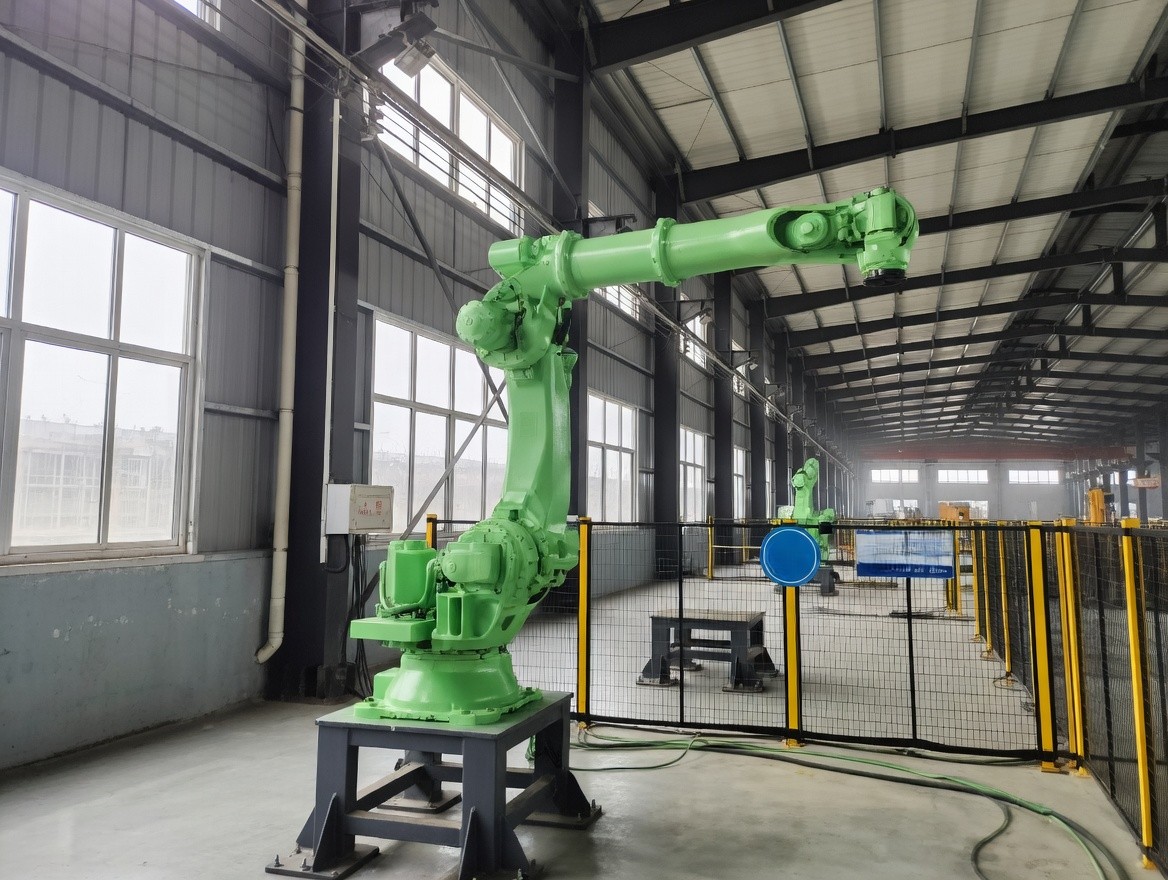
Frequently Asked Questions
What is the cost of a precision gear chain for an industrial robot joint drive in the UK?
Pricing depends on chain type, pitch, length, material, and surface treatment. A standard alloy steel inverted tooth chain for a mid-size robot joint typically ranges from £120 to £450 per loop, excluding sprockets. Stainless steel or nickel-plated variants for food or cleanroom environments carry a premium of approximately 35–50%. Contact us at [email protected] for a detailed quotation based on your specific robot model and application.
Where can I find a reliable gear chain supplier for delta robots near Birmingham?
We supply precision gear chains to integrators and manufacturers across the West Midlands, including Birmingham, Coventry, and Wolverhampton. Our standard delivery to all West Midlands postcodes is 1–2 working days. For urgent robot downtime situations, same-day dispatch is available. You can request a quote directly by emailing [email protected] with your robot model and chain specifications.
How do I choose between a roller chain and a silent chain for my robotic welding cell?
If your welding robot requires repeatability tighter than ±0.1 mm at the tool centre point, an inverted tooth (silent) chain is the better choice due to its lower polygon effect and tighter pitch tolerance. Roller chains are adequate for palletising or material-handling robots where tolerances are looser and cost is the primary concern. Your robot’s maximum joint speed and available sprocket space also factor into the decision — silent chains run smoothly at higher speeds and produce less audible noise.
What maintenance schedule should I follow for gear chains on a pick-and-place robot running three shifts in a UK food factory?
For a three-shift (20+ hours per day) food packaging robot, we recommend a visual inspection and chain elongation measurement every 2,000 operating hours. If using sealed, self-lubricating chains, no re-lubrication is needed between inspections. Replace the chain when cumulative elongation reaches 0.8% of total length for inverted tooth chains or 1.5% for roller chains. Tensioner shoe wear should be checked at each inspection interval and replaced if contact surface depth has worn by more than 1.5 mm.
Can you supply custom gear chains with food-safe certification for pharmaceutical robots in Cambridge?
Yes. We manufacture custom gear chains using AISI 316 stainless steel with PTFE-impregnated bushings and H1-certified lubricant fill, suitable for both food-contact and pharmaceutical cleanroom environments. Chains can be supplied with material certificates and compliance documentation for BRCGS, FDA 21 CFR, and EU Regulation 1935/2004. Delivery to Cambridge and the wider East of England is typically 1–2 working days from dispatch.
Which planetary gear reducer pairs best with a silent chain drive on a six-axis robot?
A low-backlash helical planetary reducer with output backlash below 3 arc-minutes is the ideal match. The reducer should be sized so that the output shaft speed falls within the optimal operating range of the silent chain — typically 500 to 3,000 rpm for a 9.525 mm pitch chain. We supply matched reducer-and-chain kits for common servo motor frame sizes (NEMA 23, NEMA 34, and metric 40–80 mm flanges), ensuring compatibility and minimising integration time for your robot build or retrofit.
Whether you are building a new robotic cell, retrofitting an existing arm, or evaluating chain drive transmission as an alternative to belt or direct-drive systems, selecting the right gear chain is a decision that directly impacts your robot’s accuracy, speed, and long-term reliability. Our team brings deep experience in robotic chain drive engineering, and we are ready to support your project from initial concept through to on-site commissioning — anywhere in the United Kingdom. Reach out to us at [email protected] to discuss your requirements or to request a technical consultation.