
Industrial Robotics • Precision Transmission
Precision Gear Chains for Industrial Robot Joint Drive Systems: Engineering Repeatable Accuracy in Automated Manufacturing
A comprehensive technical guide to selecting, specifying, and deploying high-precision gear chains in six-axis articulated robots, delta robots, and long-reach joint configurations across United Kingdom manufacturing facilities.
 Industrial robotics has fundamentally reshaped how factories across the United Kingdom approach precision assembly, welding, material handling, and quality inspection. At the core of every robotic arm lies a joint drive mechanism responsible for translating servo motor torque into controlled, repeatable angular motion. While harmonic drives and planetary gearboxes dominate much of the conversation around robot joint transmission, a growing number of automation engineers are turning to precision gear chains as a viable — and in certain configurations, superior — solution for remote joint actuation. Gear chains offer a distinct mechanical advantage: they allow the servo motor to be mounted on the robot’s fixed base rather than at the joint itself, dramatically reducing the moving mass at the end effector. This reduction in inertia translates directly into faster acceleration, shorter cycle times, and improved dynamic response — metrics that matter enormously on high-throughput production lines running in Birmingham, Sheffield, and across the greater West Midlands manufacturing corridor.
The engineering challenge, however, is not trivial. Industrial robots routinely demand repeatability within ±0.05 mm, placing extraordinary requirements on every component in the transmission path. Gear chains deployed in these applications must exhibit near-zero backlash, tightly controlled pitch accumulation error, and minimal elastic deformation under load. This article examines, in practical detail, how modern precision gear chains meet these demands — covering design principles, material selection, real-world case studies from UK manufacturers, and the technical parameters that procurement and application engineers should evaluate before specifying a chain drive for robotic joint actuation.

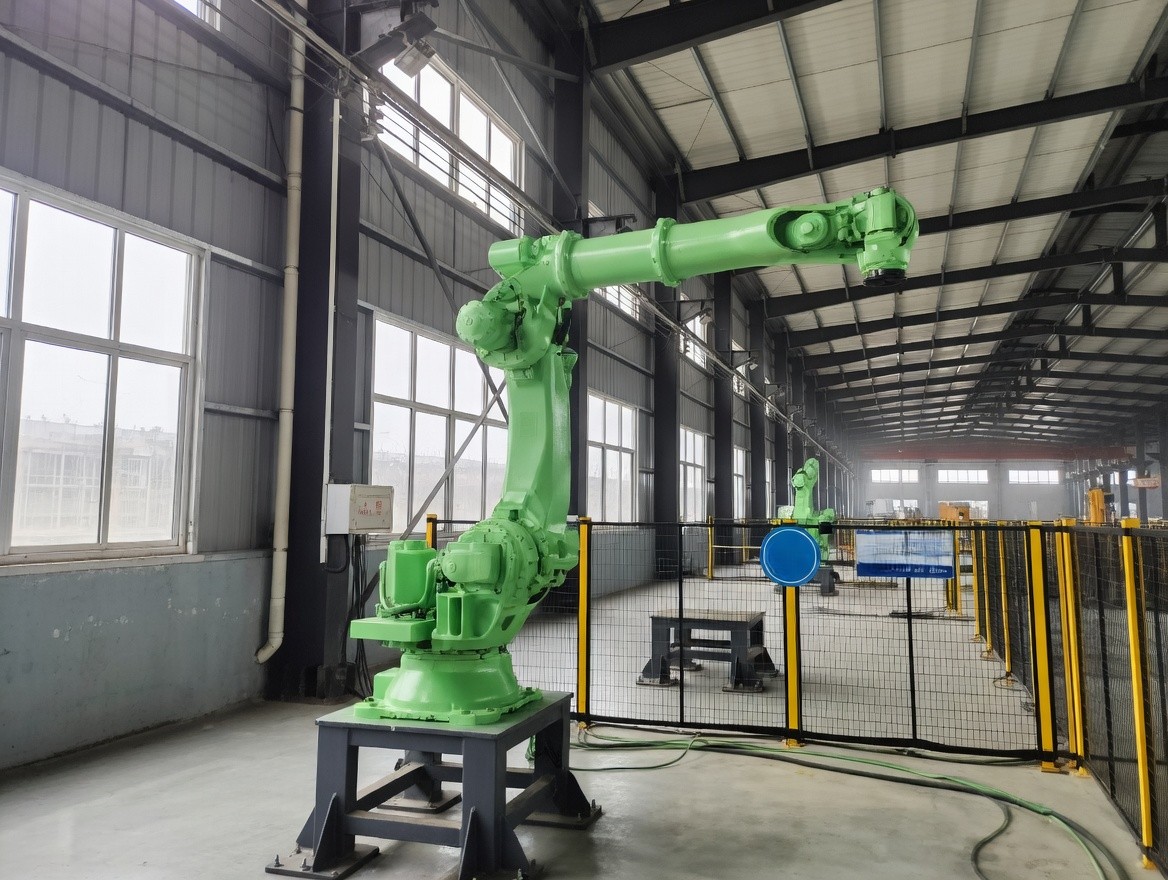
Precision gear chains engineered for robotic joint drive — delivering ±0.03 mm repeatability in automated assembly cells.
Why Gear Chains Are Gaining Ground in Robotic Joint Drives
 Conventional six-axis articulated robots mount a dedicated servo motor and reducer at each joint. This architecture works well for compact, moderate-reach configurations, but it introduces a compounding problem as arm length increases: each successive joint must carry not only its own payload but also the mass of every motor and gearbox further along the kinematic chain. For delta robots and long-arm configurations — the types frequently deployed in UK automotive body shops and aerospace riveting cells — this mass penalty degrades acceleration capability and increases energy consumption. Gear chains solve this by decoupling the motor from the joint. The servo unit remains on the stationary base, and a precision chain transmits torque over a defined distance to the driven sprocket at the joint. The result is a lighter, faster arm with lower rotational inertia at the point where it matters most.
Beyond mass reduction, gear chains introduce a level of design flexibility that rigid shaft-and-gear arrangements cannot easily replicate. Chain drives accommodate slight misalignment, tolerate modest centre-distance variations, and can route around structural members inside the robot’s arm tube. For parallel kinematic machines — including the delta-type pick-and-place robots ubiquitous in food packaging plants across East Anglia and the Scottish Lowlands — chain-driven joints allow engineers to consolidate all servo motors at the robot’s crown, achieving an extremely low moving mass on each parallel link. This architectural advantage is difficult to achieve with any other mechanical transmission at comparable cost.
Core Technical Advantages of Precision Gear Chains in Robotics
01
Near-Zero Backlash Through Pre-Tensioning
Robot-grade gear chains utilise a dual-strand pre-tensioning architecture that eliminates slack-side deflection. By applying a controlled static preload — typically between 8% and 12% of the chain’s rated working load — the system removes cumulative clearance across every pin-bushing interface. This pre-tension converts the chain from a compliant element into a quasi-rigid transmission link, enabling repeatable positioning well within the ±0.05 mm window that six-axis industrial robots demand. The preload is maintained by a spring-loaded or cam-actuated tensioner integrated into the robot’s structural frame.
02
Silent Chain (Inverted Tooth) Superiority
Within robotic joint transmissions, inverted-tooth gear chains — commonly known as silent chains — outperform roller chains on virtually every metric relevant to precision motion. Silent gear chains engage sprocket teeth along a continuous involute profile rather than wrapping around discrete rollers, which suppresses the polygon effect responsible for cyclic speed variation. In practical terms, this means smoother angular velocity at the driven joint, lower vibration transmitted to the end effector, and quieter operation — an important consideration in collaborative robot cells where noise limits are enforced under UK workplace regulations (Control of Noise at Work Regulations 2005).
03
Reduced End-Effector Inertia
Relocating the servo motor from the joint to the robot base via a gear chain drive typically reduces rotating inertia at the distal joint by 40% to 65%, depending on motor size and arm geometry. Lower inertia permits higher angular acceleration without exceeding the servo drive’s current limits, which shortens pick-and-place cycle times. For a delta robot operating at 120 cycles per minute in a UK food packaging line, even a 15% improvement in acceleration response can yield thousands of additional handled units per shift — a direct, measurable throughput gain that strengthens the business case for chain-driven architectures.
04
Controlled Pitch Accuracy & Longevity
Precision gear chains manufactured for robotics applications hold cumulative pitch tolerance to within ±0.025 mm per metre of strand length. This level of accuracy is achieved through post-heat-treatment grinding of pin and bushing bores, centreless grinding of rollers (where applicable), and 100% optical inspection of assembled pitch. Combined with case-hardened alloy steel construction (typically 20CrMnTi or equivalent), the resulting gear chains resist elongation caused by wear, maintaining positional accuracy across service intervals that frequently exceed 12,000 operating hours before adjustment is required.
Operating Principle, Materials, and Construction of Robot-Grade Gear Chains
 A precision gear chain converts rotary motion from a driving sprocket to a driven sprocket via a series of articulated links, each connected by hardened steel pins seated in precision-bored bushings. In an inverted-tooth (silent) gear chain, the link plates feature machined tooth profiles that mesh directly with the sprocket’s tooth flanks, distributing load across multiple teeth simultaneously. This multi-tooth engagement is a defining characteristic: whereas a roller chain concentrates load on a single roller-sprocket contact point at any given moment, a silent gear chain shares the transmitted force across three to five teeth, dramatically reducing contact stress and wear rate. The engagement geometry follows an involute curve matched to the sprocket’s tooth form, ensuring smooth ingress and egress of each link — the mechanical basis for the chain’s low noise and minimal velocity ripple.
Material selection is critical. Pins and bushings are manufactured from carburising-grade alloy steel — 20CrMnTi is the most common specification for robotic-grade gear chains — case-hardened to 58–62 HRC on the surface while retaining a tough, ductile core at 35–42 HRC. Link plates are blanked from medium-carbon alloy steel (typically 40Cr or equivalent), quenched and tempered to 40–48 HRC, then surface-ground to thickness tolerances of ±0.01 mm. Sprockets for robotic applications are generally machined from 42CrMo4 or induction-hardened C45 steel, with tooth profiles ground to DIN or ISO quality grade 6 or better. Lubrication is provided by synthetic PAO-based grease packed into each pin-bushing interface during assembly; robots operating in cleanroom or food-grade environments may specify PTFE-based dry-film lubrication to eliminate particulate shedding.
| Parameter | Silent Gear Chain (Robotic Grade) | Standard Roller Chain |
|---|---|---|
| Pitch Range | 6.35 mm – 15.875 mm | 6.35 mm – 25.4 mm |
| Cumulative Pitch Tolerance | ±0.025 mm/m | ±0.15 mm/m |
| Backlash (Pre-Tensioned) | < 0.02 mm (arc equivalent) | 0.10 – 0.30 mm |
| Max Operating Speed | Up to 12 m/s | Up to 7 m/s |
| Velocity Ripple (Polygon Effect) | < 0.3% | 1.5% – 4.0% |
| Noise Level (at 5 m/s) | < 65 dB(A) | 72 – 80 dB(A) |
| Pin/Bushing Hardness (Surface) | 58 – 62 HRC | 50 – 58 HRC |
| Link Plate Material | 40Cr Alloy Steel, Q&T 40–48 HRC | Carbon Steel, 35–42 HRC |
| Service Life (Typical) | 12,000 – 20,000 hours | 4,000 – 8,000 hours |
| Recommended Lubrication | Synthetic PAO Grease / PTFE Dry Film | Mineral Oil / Grease |
Where Precision Gear Chains Excel: Robotic Application Scenarios
Delta Robot Pick-and-Place in Food & Pharmaceutical Packaging
Delta robots operating at 100+ picks per minute in biscuit, confectionery, and blister-pack pharmaceutical lines across the UK rely on minimal end-effector mass to hit target cycle rates. Mounting all three servo motors at the robot’s crown and transmitting torque to each parallel arm via precision gear chains eliminates roughly 55% of the distal moving mass compared with joint-mounted motor configurations. The gear chains used in these applications are typically 9.525 mm pitch silent chains with PTFE dry-film lubrication, meeting BRCGS food safety standards and allowing washdown cleaning without lubricant migration into product zones. Facilities in York, Reading, and Glasgow have adopted this architecture to increase throughput without adding additional robot cells.
Long-Reach Articulated Robots in Automotive Body-in-White Welding
Automotive OEMs and Tier 1 suppliers operating body-in-white welding lines in Sunderland, Solihull, and Ellesmere Port deploy long-reach articulated robots where the wrist (axes 4, 5, and 6) must carry a spot-welding gun weighing 40 kg or more. Every kilogram removed from the wrist assembly directly improves the robot’s ability to achieve the rapid reorientation moves required between weld points. Gear chains running inside the robot’s forearm tube transfer servo torque from motors mounted at the elbow joint to the wrist, shaving 3 to 5 kg from the distal assembly. The gear chains specified for these welding robots must tolerate ambient temperatures up to 60 °C near the weld zone and resist spatter contamination — requirements met by enclosed chain guides and high-temperature synthetic grease.
Precision Assembly Robots in Electronics and Aerospace
In electronics PCB assembly and aerospace composite layup, robots perform tasks where positional accuracy is paramount — placing components with ±0.03 mm tolerance or positioning automated fibre placement heads on wing skin moulds. Gear chains in these applications utilise the tightest pitch tolerance class (±0.015 mm per metre), combined with backlash-free tensioning systems incorporating preloaded duplex bearings. The result is a transmission system that rivals harmonic drives in positioning accuracy while offering higher torque capacity and greater resistance to shock loads — a meaningful advantage during the rapid traverse moves between placement points. Aerospace facilities in Bristol, Broughton, and Filton have validated gear chain drive systems in composite layup robots running 24/7 production schedules.
Collaborative Robots (Cobots) and Cleanroom Applications
The growing adoption of collaborative robots in medical device manufacturing and semiconductor handling across Cambridge, Oxford, and the M4 technology corridor presents specific requirements for gear chains: ultra-low noise (below 60 dB(A) at operating speed), zero particulate emission, and compact packaging within the cobot’s slender arm profile. Silent gear chains with PTFE-coated link plates and enclosed guide rails meet these criteria, enabling cobot joint drives that are both whisper-quiet and cleanroom-compatible (ISO Class 7 and above). The pre-tensioned chain architecture also provides a predictable, measurable compliance characteristic that simplifies the force-limiting control algorithms required for safe human-robot collaboration under BS EN ISO 10218 and ISO/TS 15066.
Customer Success: Real-World Results with Precision Gear Chains
Case Study • Automotive • West Midlands, UK
Midlands Precision Automotive Ltd — Reducing Weld Cell Cycle Time by 18%
 Midlands Precision Automotive, a Tier 1 supplier of body-in-white sub-assemblies based in Coventry, operated a twelve-robot spot welding cell producing crossmember assemblies for a major UK-based OEM. The original robots used direct-drive servo motors at each wrist joint, resulting in a wrist assembly mass of 11.2 kg. During rapid reorientation moves between weld points, the heavy wrist limited axis 4 and axis 5 acceleration to 380 °/s², creating a bottleneck that capped the cell at 42 seconds per cycle. Working with our engineering team, Midlands Precision retrofitted all twelve robots with 9.525 mm pitch silent gear chain wrist drives. Motors for axes 4 and 5 were relocated to the elbow housing, and precision gear chains transmitted torque through the forearm to the wrist sprockets. Wrist mass dropped to 6.8 kg — a 39% reduction. Axis acceleration increased to 610 °/s², and cycle time fell from 42 seconds to 34.5 seconds, an 18% improvement. Over a twelve-month period, this translated to an additional 68,000 assemblies produced without adding a single robot or extending shift patterns. The gear chains ran for 14,200 hours before the first scheduled re-tensioning, exceeding the maintenance interval originally planned.
“We evaluated three transmission options for our delta robot refit — timing belts, miniature planetary gearboxes, and precision gear chains. The gear chains delivered the lowest backlash reading of any solution we tested, and installation was straightforward. Our pick rate went from 105 to 122 cycles per minute. Genuinely impressed with the build quality.”
— James Thornton, Automation Manager, Bradbury Confectionery Group, York, UK
“We needed a chain drive that could run in an ISO Class 7 cleanroom without shedding particles. The PTFE-lubricated silent gear chains from this supplier have been running for 9,000 hours in our medical device assembly robots with zero contamination events. The technical support from their UK-based application engineers made the specification process painless.”
— Dr. Sarah Patel, Process Engineering Lead, MedTech Dynamics, Cambridge, UK
“Sourcing precision gear chains from a manufacturer who also produces the matching sprockets and tensioning hardware meant we received a complete, validated system rather than assembling components from four different vendors. The dimensional consistency across batches has been excellent — critical when you’re running 20 identical robot cells.”
— Robert Gallagher, Senior Manufacturing Engineer, Aeroframe Composites, Bristol, UK
Engineered to Your Specification: Custom Gear Chain Manufacturing
Every robotic application presents unique constraints — space envelope, torque profile, speed range, environmental exposure, and positional accuracy targets. Our vertically integrated manufacturing facility produces precision gear chains from raw alloy steel billet through to finished, inspected, and packaged assemblies, giving us complete control over every dimension, heat treatment parameter, and surface finish specification. This vertical integration is what enables genuine customisation rather than catalogue-only selection.
Custom Pitch & Width
Non-standard pitch values, custom chain widths, and bespoke link plate profiles to fit proprietary robot arm sections. Minimum order: 50 metres.
Matched Sprocket Sets
Gear chains supplied with precision-ground sprocket pairs, tolerance-matched as a system. Sprockets available in 42CrMo4, stainless 17-4PH, or customer-specified material.
Special Surface Treatments
Electroless nickel plating, DLC (diamond-like carbon) coating, zinc-nickel alloy plating, or PTFE impregnation for cleanroom, corrosive, or food-contact environments.
Pre-Assembled Tensioner Modules
Complete chain-sprocket-tensioner sub-assemblies, pre-loaded and tested to your specified preload force. Delivered ready to bolt into the robot arm with no on-site adjustment required.
Typical quotation turnaround: 24–48 hours • DDP delivery to any UK address
Related Transmission Products for Robotic Drive Systems
Gear chains rarely operate in isolation. A complete robotic joint drive system typically integrates several complementary transmission components, each serving a distinct function within the motion control architecture. Our product range includes the following items, all of which can be specified alongside precision gear chains for a fully integrated drive package.
Rigid Couplings
High-precision rigid couplings connect the servo motor output shaft to the driving sprocket shaft with zero angular play. Our rigid couplings are machined from a single billet of aluminium alloy or stainless steel, achieving concentricity within 0.005 mm TIR. They are the preferred coupling type where absolute torsional stiffness is required between the motor and the gear chain drive sprocket.
Precision Planetary Gearboxes (Speed Reducers)
In applications where the servo motor speed must be reduced before entering the gear chain drive, a low-backlash planetary gearbox provides the necessary ratio — commonly 5:1 to 20:1 — while maintaining positional accuracy. Our planetary reducers achieve < 1 arcmin backlash and are available with output flanges pre-machined to accept standard driving sprocket mounting patterns, simplifying integration with the gear chain system.
Harmonic Drive Units
For robot joints requiring very high reduction ratios (50:1 to 160:1) in a compact envelope — particularly axes 1 and 2 of six-axis articulated robots — harmonic drives remain the benchmark. We supply harmonic drive units that can be paired with gear chain final-stage drives, creating a hybrid transmission architecture that combines the high ratio of the harmonic stage with the remote-actuation capability of the chain stage.
Chain Tensioning & Guide Systems
Automatic and manual tensioning devices maintain optimal preload on the gear chain throughout its service life. Our range includes spring-loaded hydraulic tensioners for high-dynamic applications, eccentric-cam manual tensioners for static installations, and UHMWPE chain guide rails that support the chain strand along extended runs inside the robot arm, preventing sag and controlling lateral displacement.
Supplying Precision Gear Chains Across the United Kingdom
The United Kingdom’s industrial robotics sector continues to expand, driven by reshoring initiatives, labour market pressures, and the productivity ambitions outlined in the UK government’s manufacturing strategy. From the automotive heartlands of the West Midlands to the advanced electronics clusters along the M4 corridor, from aerospace composites facilities in the South West to food processing plants in Lincolnshire and East Anglia, precision gear chains are finding their way into an increasingly diverse range of robotic applications. Our distribution and technical support infrastructure is structured to serve this geographic breadth. Stock of standard-pitch robotic-grade gear chains is held at our UK distribution centre for same-day dispatch, with next-day delivery available to all mainland UK postcodes. For custom-engineered chains and matched sprocket systems, typical lead times run four to six weeks from drawing approval to DDP delivery at your facility — whether that facility is in London, Manchester, Edinburgh, Cardiff, or Belfast.
Our UK-based application engineering team provides on-site support across England, Scotland, and Wales for system sizing, installation supervision, and commissioning assistance. This includes finite element analysis of chain loading under the specific duty cycle of your robot, sprocket tooth profile optimisation for your target speed range, and vibration analysis to verify that the installed gear chain drive meets your repeatability specification. We also offer scheduled maintenance contracts covering chain tension inspection, wear measurement, and lubrication replenishment — helping UK manufacturers maximise uptime and protect the return on their robotics investment.
Frequently Asked Questions About Gear Chains for Industrial Robots
What is the typical cost of precision gear chains for a six-axis industrial robot in the UK?
Pricing depends on chain pitch, width, strand length, material specification, and surface treatment. For a standard 9.525 mm pitch silent gear chain in robotic grade, UK customers can expect to pay between £35 and £65 per metre for the chain alone. Complete drive kits including matched sprockets and a tensioner module typically range from £280 to £750 per joint axis. Custom-engineered solutions with special coatings or non-standard pitch will carry a premium — contact [email protected] for a detailed quotation.
Where can I find a reliable gear chain supplier for robotic automation near Manchester?
Our UK distribution centre provides next-day delivery to all Manchester and Greater Manchester postcodes. We also offer on-site technical consultations at your facility in the Manchester area, including chain sizing calculations, sprocket specification, and installation guidance. Many robotic integrators in the North West of England source their precision gear chains through us for both new-build projects and retrofit programmes.
How do I choose between a silent gear chain and a roller chain for my delta robot application?
For delta robots and any application requiring repeatability better than ±0.1 mm, a silent (inverted-tooth) gear chain is the stronger choice. Silent chains exhibit significantly less polygon effect, engage multiple sprocket teeth simultaneously, and produce lower noise — all critical factors in high-speed, high-precision robotic pick-and-place. Roller chains may suffice for less demanding transfer or conveyor-drive applications within the robot cell, but they introduce measurably more backlash and velocity variation at the driven joint.
What maintenance schedule should I follow for gear chains in automotive welding robots in the UK?
For automotive welding robot applications, we recommend a visual tension inspection every 2,000 operating hours, a quantitative chain elongation measurement every 4,000 hours, and lubrication replenishment (or guide rail replacement in dry-film applications) every 6,000 hours. Complete chain replacement is typically scheduled at 14,000 to 18,000 hours depending on duty severity. Our UK service team offers scheduled maintenance contracts that automate these intervals and include detailed inspection reports for your records.
Can you supply custom-pitch gear chains for a proprietary robot design with non-standard sprocket centres?
Yes. Our manufacturing facility produces gear chains with custom pitch values outside the standard ISO series, along with bespoke link plate widths and profiles to suit proprietary robot arm cross-sections. We work from your CAD data or 2D drawings, provide prototype chains within three weeks, and scale to production volumes once your validation testing is complete. Email your requirements to [email protected] for an initial feasibility review.
Which gear chain specification do I need for a cleanroom pharmaceutical robot near Cambridge?
For ISO Class 7 cleanroom pharmaceutical robot applications, we recommend our PTFE dry-film lubricated silent gear chain with electroless nickel-plated link plates and stainless steel pins. This configuration eliminates particulate generation from conventional grease lubrication and resists the chemical agents used in cleanroom wipe-down protocols. Several pharmaceutical and medical device manufacturers in the Cambridge and East Anglia region are already running this specification successfully.
How quickly can I get a quote for robotic-grade gear chains delivered to my facility in Birmingham?
We typically return a formal quotation within 24 to 48 hours of receiving your specification. For standard-pitch gear chains held in UK stock, we can dispatch the same day with next-day delivery to all Birmingham and West Midlands postcodes. Custom-engineered chains require four to six weeks from drawing approval. Reach out to [email protected] or call our UK sales office to start the process.
Ready to Specify Precision Gear Chains for Your Robotic Application?
Our application engineers are available to discuss your project requirements, provide technical sizing assistance, and deliver a detailed quotation — typically within 24 hours.
edit by gzl