
Precision Transmission Solutions
Gear Chains for Industrial Robot Joint Drive Systems: Engineering Precision in Automated Manufacturing
How silent-type gear chains are redefining robotic arm accuracy, payload capacity, and long-term reliability across UK and European automation lines.
 Industrial robotics has transformed the way manufacturers in the United Kingdom and across Europe approach production. From automotive welding cells in the West Midlands to pharmaceutical packaging lines in Cambridge, six-axis articulated robots and delta robots handle tasks that demand extraordinary repeatability. At the heart of every robotic joint lies a transmission system that converts servo motor torque into precise angular movement. While harmonic drives and planetary gearboxes dominate many configurations, a growing number of robotics integrators are turning to gear chains — particularly inverted-tooth silent chains — to solve a persistent engineering problem: reducing end-effector mass without sacrificing positional accuracy. Gear chains allow engineers to relocate heavy servo motors away from distal joints and transmit power remotely through a chain drive, cutting the inertia that the robot must overcome during rapid pick-and-place cycles. The result is faster cycle times, lower energy consumption, and longer service life for critical joint bearings. In this article, we explore the engineering principles, material science, and real-world application data behind gear chains purpose-built for industrial robot joint drive systems, and explain why leading UK automation firms are specifying these components for next-generation production cells.

Why Gear Chains Are Gaining Traction in Robot Joint Drives
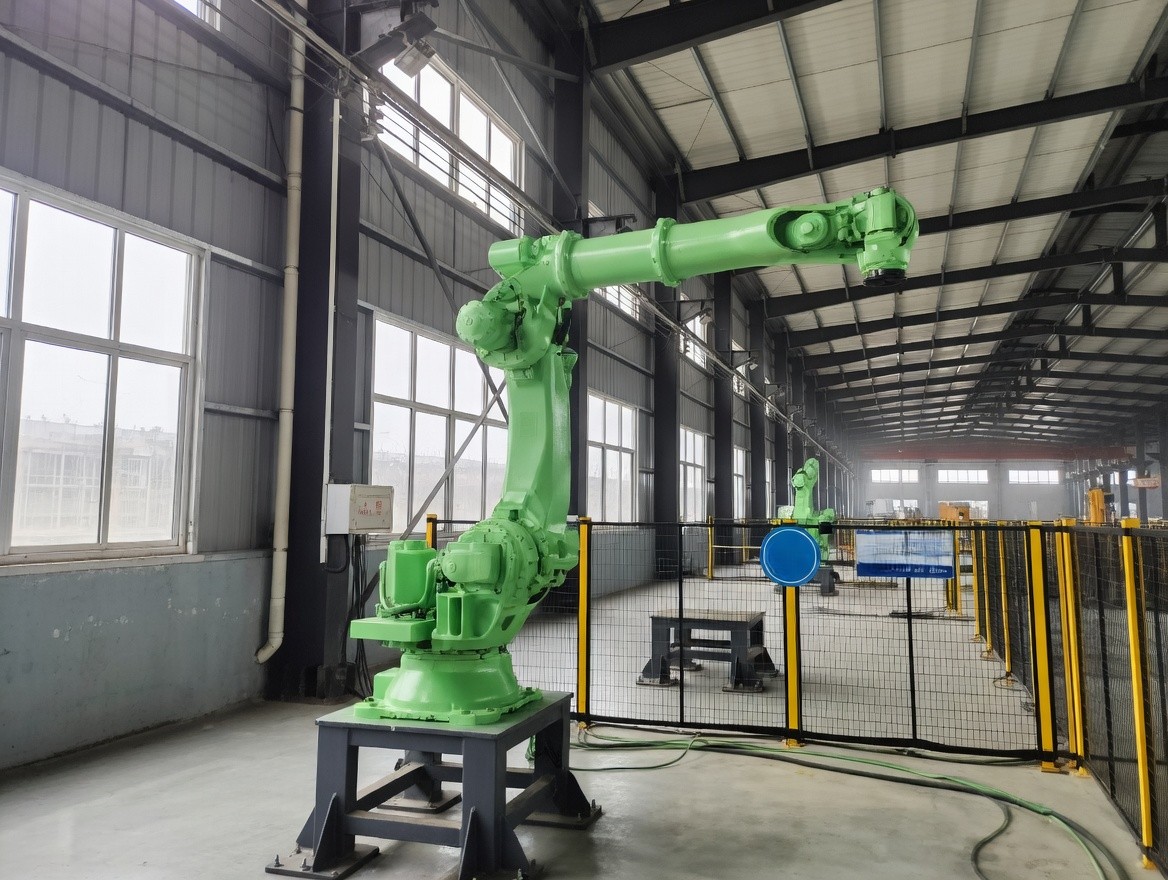
 A conventional six-axis industrial robot mounts a servo motor directly at each joint, coupling it to a speed reducer that sits inside the joint housing. This architecture works well for the base and shoulder axes, where the motor mass is close to the robot’s centre of gravity. The challenge appears at the wrist and elbow joints: every gram of motor and gearbox weight at these distal positions multiplies the load on upstream joints, increases the required torque capacity of the entire kinematic chain, and degrades dynamic response. Engineers in Birmingham, Sheffield, and across the UK’s robotics corridor have documented that relocating even one motor from a distal joint to the robot’s stationary base can reduce peak torque demand on the shoulder axis by 12 to 18 percent. Gear chains make this relocation feasible. A precision inverted-tooth chain runs from a sprocket on the base-mounted motor, through guide channels in the robot arm, to a driven sprocket at the remote joint. Because gear chains mesh on a toothed profile rather than wrapping around cylindrical rollers, they exhibit far less polygon effect — the speed variation inherent in roller chain drives — delivering smoother torque transfer that keeps end-effector vibration within acceptable limits. The net engineering benefit is a robot that accelerates faster, settles quicker after a move, and holds position with tighter tolerance, all of which translate to shorter cycle times and higher throughput on automated production lines.
Operating Principle: How Gear Chains Transmit Motion in Robotic Arms
Gear chains — often called inverted-tooth chains or silent chains — employ a series of flat link plates with gear-tooth profiles stamped or machined into their inner edges. When the chain wraps around a sprocket, each link plate engages multiple teeth simultaneously, distributing the load across a broader contact area than a conventional roller chain. This multi-tooth engagement is the principal reason gear chains achieve lower backlash and reduced vibration. In a robotic joint drive, the driving sprocket is keyed to the servo motor shaft via a rigid coupling, while the driven sprocket is connected to the joint output shaft through a precision flange. Pre-tension is applied to the chain using a spring-loaded or cam-actuated tensioner that maintains constant contact on the slack side, eliminating the micro-slack that would otherwise degrade repeatability. Because the link plates flex only within a narrow elastic range, the chain behaves almost like a rigid transmission element — critical when the robot controller expects the joint angle to match the encoder feedback within ±0.05 mm of arc-equivalent displacement. Material selection plays a decisive role here. The link plates are typically cold-formed from chromium-molybdenum alloy steel, then case-hardened to HRC 58–62 on the tooth flanks while retaining a tough, ductile core. Pins and bushings are manufactured from bearing-grade steel with a surface finish below Ra 0.2 micrometres, reducing friction and extending fatigue life well beyond the 20,000-hour benchmark that most industrial robot specifications demand.
Materials and Construction: What Makes a Robot-Grade Gear Chain Different
 Not every gear chain can satisfy the stringent demands of robotic joint drives. Standard industrial silent chains, designed for conveyor or timing applications, tolerate pitch accumulation errors of ±0.15 mm over a 500 mm span. Robot-grade gear chains tighten that tolerance to ±0.025 mm over the same span — a six-fold improvement that requires controlled-atmosphere heat treatment, precision grinding of pin bores, and 100-percent dimensional inspection of every finished chain assembly. The guide plates that keep the chain tracking on the sprocket are machined from hardened tool steel rather than stamped from mild steel, eliminating lateral play that could introduce yaw error at the driven joint. Lubrication is another differentiator. Robotic environments, especially in food processing and pharmaceutical plants across the UK, often prohibit external lubricants that could contaminate products. Robot-grade gear chains are available with sintered bronze bushings impregnated with synthetic oil, providing maintenance-free operation for up to 8,000 hours before re-lubrication is required. Some configurations use a dry PTFE coating on the pin-bushing interface, suitable for ISO Class 5 cleanroom environments. The chain pitch itself is selected to match the sprocket tooth count and the desired reduction ratio — common pitches for robot drives range from 6.35 mm (1/4 inch) to 9.525 mm (3/8 inch), with smaller pitches favoured for compact wrist joints and larger pitches used in shoulder or base drives where higher torque capacity is needed.
Technical Specifications: Robot-Grade Gear Chain Parameters
| Parameter | Standard Silent Chain | Robot-Grade Gear Chain |
|---|---|---|
| Pitch Range | 9.525 mm – 25.4 mm | 6.35 mm – 9.525 mm |
| Pitch Accumulation Error (per 500 mm) | ± 0.15 mm | ± 0.025 mm |
| Backlash at Driven Sprocket | 0.08 – 0.15 mm | 0.01 – 0.03 mm |
| Maximum Operating Speed | up to 12 m/s | up to 8 m/s (precision-optimised) |
| Tensile Strength | 28 – 45 kN | 18 – 32 kN |
| Link Plate Hardness | HRC 40 – 48 | HRC 58 – 62 (case-hardened) |
| Pin Surface Finish | Ra 0.8 µm | Ra 0.2 µm or finer |
| Service Life Target | 10,000 hours | 20,000+ hours |
| Lubrication Options | Oil bath / drip | Sintered bronze / PTFE dry coat |
| Repeatability Contribution | ± 0.10 mm | ± 0.02 mm |
Key Advantages of Gear Chains in Robotic Drive Applications
◆ Reduced End-Effector Inertia
By relocating the servo motor from the robot’s distal joint to its stationary base or shoulder, gear chains can cut the rotating mass at the wrist by up to 40 percent. Lower inertia means the joint accelerates and decelerates faster, shortening settle time and improving pick-and-place cycle rates. For high-speed delta robots handling lightweight products — biscuit packaging lines in Leicester, for instance — this mass reduction directly translates to measurable throughput gains.
◆ Near-Zero Backlash Transmission
The multi-tooth meshing geometry of gear chains, combined with pre-tension mechanisms, holds backlash below 0.03 mm at the driven sprocket. This level of precision satisfies the ±0.05 mm repeat positioning requirement that most industrial robot controllers demand. Compared to roller chain alternatives, gear chains reduce angular play by a factor of three to five, which is critical when the robot is performing arc welding, laser cutting, or precision dispensing operations.
◆ Low Noise, Smooth Torque Delivery
Gear chains engage sprocket teeth progressively rather than with the abrupt impact characteristic of roller chains. This inverted-tooth profile generates significantly less vibration and audible noise — typically 6 to 10 dB lower than an equivalent roller chain drive at the same speed. In collaborative robot cells where human operators work alongside the machine, reduced noise levels contribute to a safer and more comfortable workspace environment, aligning with UK Health and Safety Executive guidelines on occupational noise exposure.
◆ Extended Maintenance Intervals
With self-lubricating bushing options and hardened contact surfaces, robot-grade gear chains achieve service lives exceeding 20,000 operating hours before requiring replacement. For a two-shift manufacturing plant running 4,000 hours per year, that equates to roughly five years of continuous service — reducing both planned downtime and spare parts inventory costs. The maintenance-free lubrication variants are particularly valued in food, beverage, and pharmaceutical production facilities throughout the UK where contamination control is paramount.
Application Scenarios: Where Gear Chains Excel in Robotics
Delta Robots in High-Speed Packaging
Delta (parallel) robots rely on three or four kinematic arms driven from motors mounted on a fixed overhead platform. Gear chains route power from these platform-mounted motors down through lightweight carbon-fibre arms to the end-effector, keeping arm mass minimal. In confectionery packaging lines operating at 180 picks per minute, gear chains provide the stiffness and precision needed to place individual chocolates into trays without positional overshoot.
Extended-Reach Articulated Arms
When a six-axis robot arm exceeds 2,000 mm reach, the torque requirement at the shoulder joint increases dramatically with every kilogram added to the wrist assembly. Gear chains allow the wrist motor to be relocated to the upper arm or shoulder, with the chain running inside a sealed channel along the forearm. This configuration is widely adopted in automotive body-in-white welding cells across the West Midlands, where robots handle heavy spot-welding guns at full extension.
Cleanroom Assembly Robots
Semiconductor and pharmaceutical manufacturers in the UK — particularly in the Cambridge and Reading technology corridors — require robots that generate minimal particulate contamination. Gear chains with PTFE-coated pins and sealed guide plates produce far fewer wear particles than open roller chains. Combined with stainless-steel sprockets, these drives meet ISO Class 5 cleanroom standards while delivering the sub-0.05 mm repeatability demanded by microelectronics assembly.
Collaborative Robot (Cobot) Joints
Collaborative robots designed to work alongside human operators must be lightweight and quiet. Gear chains satisfy both requirements: the inverted-tooth design runs 6–10 dB quieter than roller chains, and the ability to remote-mount motors reduces the overall mass of the cobot arm. UK manufacturers integrating cobots into existing manual assembly stations — especially in the aerospace supply chain around Bristol and Derby — benefit from the compact, low-noise profile that gear chain drives offer.
Customer Success: Real Results from the Factory Floor
Case Study — Coventry Automotive Components Ltd, West Midlands, UK
Industry: Automotive Tier-1 Supplier | Application: Robotic Spot Welding | Robots: 12 × Six-Axis Articulated Arms
Coventry Automotive Components operates a body-in-white welding line with twelve six-axis robots, each carrying a 35 kg servo spot-welding gun at full 2,200 mm reach. The original configuration mounted the J4 (wrist roll) servo motor directly at the forearm-wrist junction, contributing 4.8 kg to the distal mass. During high-speed welding sequences, the shoulder axis servo frequently triggered overcurrent faults, limiting line speed to 14 welds per minute per robot.
Working with our engineering team, Coventry Automotive retrofitted each robot’s J4 axis with a 9.525 mm pitch gear chain drive, relocating the wrist motor to the upper arm casting. The chain ran through a sealed aluminium channel bolted to the forearm extrusion, with a spring-loaded tensioner maintaining 280 N pre-load. After commissioning and calibrating the new drives, the plant recorded the following improvements:
| Metric | Before Retrofit | After Gear Chain Retrofit |
|---|---|---|
| Distal Joint Mass (J4) | 4.8 kg | 1.9 kg |
| Weld Rate per Robot | 14 welds/min | 19 welds/min |
| Shoulder Axis Overcurrent Faults | 3–5 per shift | 0 |
| Repeat Positioning (J4) | ±0.06 mm | ±0.03 mm |
| Annual Energy Cost (12 robots) | £48,200 | £39,500 |
The retrofit paid for itself within seven months through increased production volume and reduced energy expenditure. Eighteen months post-installation, none of the twelve gear chain assemblies has required any maintenance beyond routine visual inspection.
“We evaluated three chain drive suppliers before selecting gear-chains.top. Their pitch tolerance data was the tightest we had seen, and the on-site commissioning support in Coventry was outstanding. The weld rate improvement alone justified the investment.”
— James Hargreaves, Production Engineering Manager, Coventry Automotive Components Ltd
“Our delta robots package 12,000 blister packs per hour across four lines. After switching to gear chain drives, we measured a 22-percent reduction in cycle time and the noise on the packaging floor dropped noticeably. The maintenance team hasn’t touched the chains in over a year.”
— Dr. Sarah Thornton, Head of Automation, Pharmaline UK, Reading
“We needed a cleanroom-compatible chain solution for our semiconductor handling robots. The PTFE-coated gear chains met ISO Class 5 particle requirements right out of the box and gave us the positioning accuracy we required — less than 0.04 mm repeatability at the end-effector.”
— Michael Chen, Facilities Engineering Lead, Cambridge Microelectronics Group
Complementary Products: Building a Complete Robot Drive System
A gear chain is one element in a broader transmission assembly. Achieving optimal robot joint performance requires careful selection and integration of every component in the power path. Our product range includes the key complementary elements that engineers need when specifying a gear chain drive for robotic applications.
Rigid Couplings
Zero-backlash rigid couplings connect the servo motor shaft to the driving sprocket, ensuring that no angular play is introduced at the input side of the chain drive. Our rigid couplings are machined from a single billet of high-strength aluminium or stainless steel and are available in clamp, keyed, and shrink-disc configurations to suit different motor flange standards.
Precision Planetary Gearboxes
When the required reduction ratio exceeds what a single-stage chain drive can deliver efficiently, a compact planetary gearbox can be inserted between the servo motor and the driving sprocket. Our planetary gearboxes offer backlash below 3 arc-minutes and are designed to integrate seamlessly with the rigid coupling and sprocket assembly, providing reduction ratios from 3:1 to 100:1.
Harmonic Drive Reducers
For robot joints that demand extremely high reduction ratios in a compact envelope — typically 50:1 to 160:1 — harmonic drive reducers remain the benchmark. We supply harmonic reducers that can be combined with gear chain pre-stages, creating hybrid transmission architectures that balance the compactness of a harmonic drive with the remote-mounting flexibility of a gear chain.
Chain Tensioners and Guide Rails
Maintaining correct pre-tension is essential for preserving the low-backlash characteristics of a gear chain drive. Our spring-loaded and cam-actuated tensioners are designed specifically for robotic applications, offering adjustable pre-load from 100 N to 500 N. Matched hardened guide rails keep the chain tracking precisely on the sprocket, preventing lateral displacement under dynamic acceleration loads.
Our Manufacturing Capability: Precision-Engineered and Custom-Built
Every gear chain we produce for robotic joint drives is manufactured in our own facility, where we control every step from raw material inspection through final dimensional verification. Our production lines include CNC fine-blanking presses capable of holding link plate tooth profiles to ±0.005 mm, controlled-atmosphere carburising furnaces for consistent case depth, and centreless grinding stations that finish pin diameters to sub-micrometre tolerances. Each completed chain assembly undergoes 100-percent pitch measurement on a coordinate measuring machine, with individual inspection certificates available upon request.
We understand that robotic applications rarely use off-the-shelf components without modification. Our engineering team works directly with UK robotics integrators and OEMs to develop custom gear chain configurations — non-standard pitches, bespoke sprocket tooth counts, special surface coatings, unique chain widths, and application-specific lubrication solutions. Whether you need a single prototype chain for evaluation or a production batch of 5,000 assemblies, our flexible manufacturing setup can accommodate your requirements with lead times starting at three weeks for custom orders shipped to the United Kingdom.
Serving the United Kingdom’s Robotics and Automation Industry
 The United Kingdom ranks among Europe’s fastest-growing markets for industrial robotics, with the British Automation and Robot Association reporting year-on-year increases in robot installations across automotive, food and beverage, pharmaceutical, and aerospace sectors. Our gear chain products are specified by integrators and end users throughout the country — from automotive welding lines in the West Midlands and engine assembly plants in Sunderland, to pharmaceutical packaging facilities in the South East and precision electronics factories in Scotland’s Silicon Glen. We maintain dedicated stock in our UK distribution warehouse, enabling next-day delivery on standard gear chain sizes to any mainland UK address. For custom-engineered orders, our technical sales engineers are available for on-site consultations in England, Wales, and Scotland, ensuring that chain drive specifications are validated against actual robot kinematics and production requirements before manufacture begins.
Compliance with British and European standards is built into our manufacturing process. All robot-grade gear chains are produced in accordance with BS ISO 606 (short-pitch precision roller chains) adapted for silent-chain geometries, and our quality management system is certified to ISO 9001:2015. Material traceability documentation, REACH and RoHS compliance declarations, and UKCA-marked packaging are provided as standard with every shipment to United Kingdom customers.
Frequently Asked Questions
What is the cost of precision gear chains for industrial robot joints supplied to the UK?
Pricing for robot-grade gear chains depends on chain pitch, width, length, material specification, and any custom requirements such as special coatings or cleanroom-compatible lubrication. As a guide, standard 6.35 mm pitch silent chains for robotic wrist drives typically range from £85 to £220 per metre for UK customers, with volume discounts available on orders above 50 metres. Contact our sales team at [email protected] for a detailed quotation tailored to your robot model and application.
Where can I find a reliable gear chain supplier for robotic automation in the West Midlands?
Our company supplies precision gear chains to robotics integrators and automotive manufacturers throughout the West Midlands, including Coventry, Birmingham, and Wolverhampton. We hold stock in our UK distribution centre and can arrange next-day delivery to any West Midlands postcode. Our technical sales engineers are also available for on-site design reviews and commissioning support in the region.
How do gear chains compare to harmonic drives for repeat positioning accuracy in delta robots?
Harmonic drives typically achieve backlash below 1 arc-minute at the output, translating to repeat positioning well under ±0.01 mm. Gear chains, when properly pre-tensioned and manufactured to robot-grade tolerances, achieve ±0.02 to ±0.03 mm repeatability contribution — sufficient for the vast majority of delta robot applications such as pick-and-place, packaging, and assembly. The advantage of gear chains is their ability to transmit power over a distance, enabling motor relocation that reduces arm inertia and increases dynamic response speed, which harmonic drives cannot offer because they are inline devices.
Which type of gear chain is best for cleanroom pharmaceutical robots in the United Kingdom?
For pharmaceutical and cleanroom environments, we recommend our PTFE dry-coated silent chain with stainless-steel link plates and pins. This configuration eliminates the need for external lubrication, produces minimal wear particles, and meets ISO Class 5 particulate cleanliness requirements. The stainless-steel construction also withstands the hydrogen peroxide vapour and isopropanol wipe-down protocols common in UK pharmaceutical facilities.
How long do robot-grade gear chains last before they need replacing in a two-shift manufacturing plant?
Under typical two-shift operation (approximately 4,000 hours per year), our robot-grade gear chains are engineered to deliver a minimum service life of 20,000 hours — roughly five years — before chain elongation exceeds the 0.5 percent wear limit that triggers replacement. Actual service life depends on operating speed, load profile, ambient temperature, and lubrication regime. Regular visual inspection at 2,000-hour intervals is recommended, though no active maintenance is required for self-lubricating variants during the rated service period.
Can I get a custom gear chain quote for a six-axis welding robot application in the UK?
Yes. We regularly engineer bespoke gear chain solutions for six-axis welding robots used by UK automotive and fabrication companies. To provide an accurate quotation, we need the robot make and model, the joint axis to be driven, the required chain length and pitch, the operating speed range, and any environmental constraints such as welding spatter protection. Send these details to [email protected] and our application engineers will respond with a technical proposal and pricing within two working days.
What is the difference between a gear chain and a roller chain for robot joint drives?
The fundamental difference lies in how each chain engages the sprocket. A roller chain wraps around cylindrical rollers that seat in the sprocket tooth gaps, creating a pronounced polygon effect — a cyclic speed variation that introduces vibration and positional error. A gear chain (inverted-tooth or silent chain) uses flat link plates with machined tooth profiles that mesh directly with the sprocket teeth across multiple contact points simultaneously. This results in significantly smoother power transmission, lower noise (typically 6–10 dB less), and tighter backlash control — all critical factors when the chain is driving a robot joint that must hold position to within ±0.05 mm.
Ready to Upgrade Your Robot’s Drive System?
Speak with our application engineers about precision gear chains engineered for your specific robot and production environment.
edit by gzl